
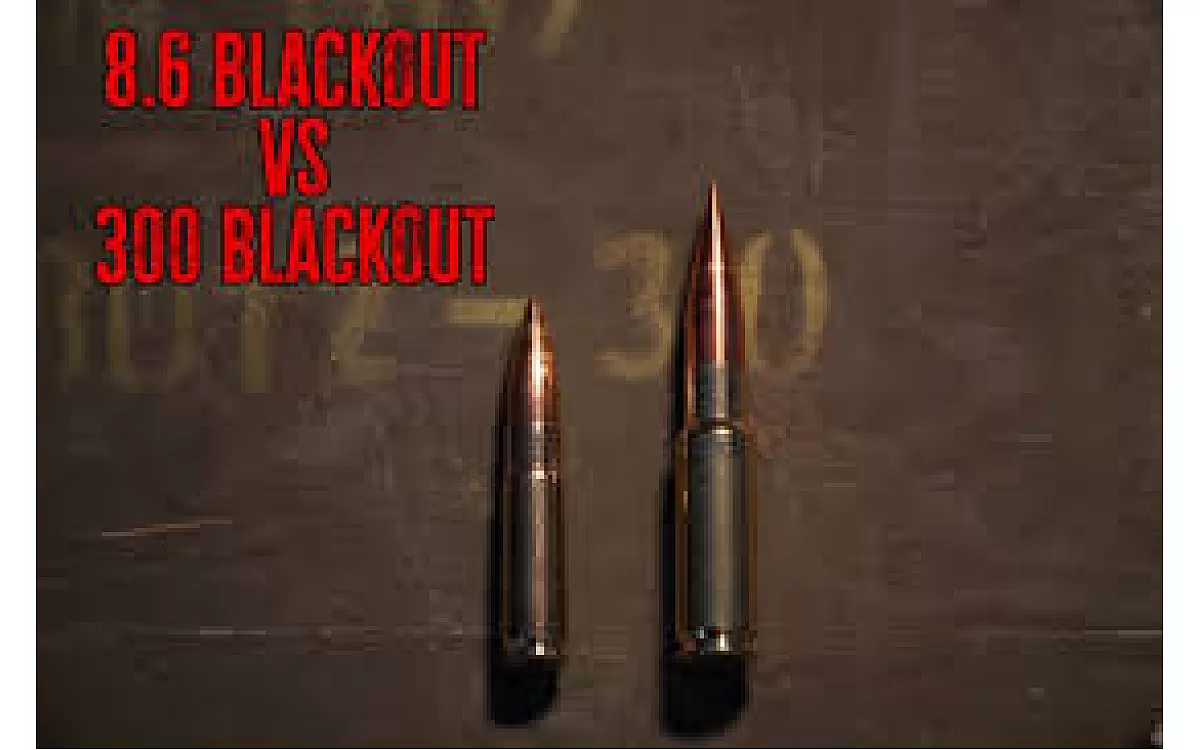
Micro ARP builds have become one of the fastest-growing trends in the firearms world. Shooters are moving toward compact, maneuverable systems that prioritize portability, suppressor performance, and short-barrel efficiency over traditional long-range setups.
From truck guns and backpack builds to compact hunting systems and suppressed-only platforms, ultra-short AR configurations are now a major category of interest among enthusiasts.
At the center of this movement are two calibers specifically designed to thrive in short barrels:
Both were engineered around suppressor use and compact platforms. Both deliver significantly better short-barrel performance than traditional 5.56 NATO. And both have developed strong followings among shooters looking for maximum efficiency from minimal barrel length.
But despite the similarities, these calibers serve very different purposes.
Choosing between .300 BLK and 8.6 BLK comes down to understanding:
platform size
recoil characteristics
suppression efficiency
intended use
effective range
ammunition availability
terminal performance
For shooters planning a compact AR build, these differences matter more than almost any other component choice.
Understanding the Philosophy Behind Both Calibers
Traditional rifle cartridges were designed around longer barrels. Once shooters began shortening AR platforms, many calibers lost significant efficiency due to incomplete powder burn, excessive flash, and dramatic velocity loss.
Both .300 Blackout and 8.6 Blackout were created to solve that problem.
Rather than forcing long-range rifle cartridges into short barrels, these rounds were optimized specifically for:
compact configurations
suppressed shooting
heavy projectiles
efficient powder burn
strong terminal performance from short barrels
That design philosophy is why both calibers dominate conversations around:
micro AR pistols
suppressor-ready builds
backpack guns
compact hunting rifles
short-barrel tactical platforms
.300 Blackout — The Original Compact Suppressor King
.300 AAC Blackout transformed the AR market because it offered something shooters had wanted for years:
A caliber that could run efficiently from extremely short barrels while still functioning reliably in the AR-15 platform.
Unlike 5.56 NATO, .300 BLK maintains strong performance from:
5-inch barrels
7.5-inch barrels
9-inch barrels
This immediately made it attractive for compact builds.
Why .300 Blackout Works So Well in Micro Builds
Compact AR-15 Platform Compatibility
One of the biggest advantages of .300 BLK is that it runs on a standard AR-15-sized platform.
That means:
smaller receivers
lighter overall weight
compact handling
improved maneuverability
For micro builds, this is a major advantage.
A compact .300 BLK pistol can remain extremely portable while still delivering rifle-caliber performance.
Excellent Suppressed Performance
Few calibers suppress as effectively as .300 Blackout.
Subsonic loads paired with modern suppressors create one of the quietest semi-automatic rifle systems available.
This is especially noticeable in:
5-inch setups
7.5-inch builds
dedicated suppressed configurations
The cartridge was engineered specifically around suppressor efficiency, which is why it continues to dominate short-barrel suppressed AR builds.
Lower Recoil and Easier Control
Compared to larger calibers, .300 BLK produces relatively mild recoil.
Benefits include:
faster follow-up shots
improved control in small pistols
less shooter fatigue
smoother cycling
This becomes increasingly important in lightweight micro builds where recoil management directly affects usability.
Better Ammunition Availability
Another advantage of .300 BLK is ammunition accessibility.
Compared to newer calibers:
ammo is easier to find
prices are lower
more load options exist
subsonic choices are widespread
This makes it easier for shooters to train consistently and experiment with different loads.
8.6 Blackout — The Heavy-Hitting Evolution
8.6 Blackout approaches compact performance from an entirely different direction.
Instead of prioritizing lightweight portability, it focuses on delivering maximum energy from short barrels.
Built around the AR-10 platform, 8.6 BLK launches significantly heavier projectiles while maintaining exceptional short-barrel efficiency.
The result is a compact system capable of delivering enormous subsonic energy.
Why 8.6 Blackout Has Exploded in Popularity
8.6 BLK has gained attention because it offers something unique:
Heavy-caliber performance optimized specifically for:
short barrels
suppressor use
subsonic hunting
compact battle-rifle configurations
The caliber has become especially popular among shooters interested in:
hog hunting
large-game hunting
short-range stopping power
suppressed terminal performance
Advantages of 8.6 Blackout for Compact Builds
Massive Projectile Weight
8.6 BLK launches substantially heavier bullets than .300 BLK.
This creates:
stronger momentum
deeper penetration
larger wound channels
increased energy transfer
For shooters prioritizing terminal performance, this is the caliber’s biggest selling point.
Excellent Short-Barrel Efficiency
Despite its power, 8.6 BLK performs extremely well from:
8-inch barrels
10-inch barrels
12-inch barrels
It was engineered specifically for compact systems.
This allows shooters to build relatively short rifles without sacrificing effectiveness.
Superior Hunting Capability
Compared to .300 BLK, 8.6 BLK offers dramatically improved hunting performance.
Its heavier projectiles and stronger energy delivery make it better suited for:
hogs
deer
larger game
dense brush environments
For hunters wanting compact suppressed systems, 8.6 BLK has become increasingly attractive.
The Biggest Difference: AR-15 vs AR-10 Platforms
The most important distinction between these calibers is platform size.
.300 Blackout
Uses the AR-15 platform:
smaller
lighter
more compact
easier to maneuver
8.6 Blackout
Uses the AR-10 platform:
larger receivers
increased weight
bigger footprint
heavier recoil systems
This changes the entire feel of the firearm.
Even when barrel lengths are short, 8.6 BLK builds still feel closer to compact battle rifles than true micro pistols.
Suppressor Performance Comparison
Suppressor performance is one of the primary reasons shooters choose these calibers.
But each behaves differently once suppressed.
Suppressing .300 Blackout
.300 BLK remains one of the easiest rifle calibers to suppress.
Advantages include:
lower recoil impulse
reduced gas blowback
softer report
smoother cycling
Flow-through suppressors and compact cans work exceptionally well on short .300 BLK systems.
Many shooters build dedicated suppressed-only setups around this caliber because of its efficiency.
Suppressing 8.6 Blackout
8.6 BLK also suppresses extremely well, especially with subsonic ammunition.
However:
recoil is stronger
suppressor heat increases faster
backpressure can become more noticeable
heavier-duty suppressors are preferred
The sound signature is often deeper and more aggressive compared to .300 BLK.
Barrel Length Considerations
Barrel length plays a major role in both calibers.
Best Barrel Lengths for .300 BLK
Popular configurations include:
5”
7.5”
9”
These maintain excellent efficiency while maximizing compactness.
The cartridge was practically designed around this size range.
Best Barrel Lengths for 8.6 BLK
8.6 BLK generally performs best from:
8”
10”
12”
While still compact, these builds tend to be slightly larger overall due to the AR-10 platform.
Which Caliber Is Better for Backpack Guns?
For true backpack-size builds, .300 BLK has a clear advantage.
Reasons include:
smaller receiver set
lighter weight
shorter overall dimensions
easier portability
better compact handling
A micro .300 BLK pistol is significantly easier to transport discreetly than an 8.6 BLK system.
Which Caliber Is Better for Hunting?
This depends on intended game size.
.300 BLK excels for:
smaller game
close-range hunting
lightweight carry setups
8.6 BLK excels for:
larger game
stronger terminal energy
subsonic hunting applications
harder-hitting short-barrel performance
For hunting-focused shooters, 8.6 BLK often becomes the preferred choice.
Recoil Comparison
Recoil matters heavily in compact platforms.
.300 BLK
Produces:
smoother recoil
better control
faster target transitions
8.6 BLK
Produces:
stronger impulse
heavier cycling feel
more aggressive recoil behavior
The difference becomes noticeable during rapid fire.
Ammunition Cost and Availability
Practicality also matters.
.300 BLK
Advantages:
more available
lower cost
broader selection
8.6 BLK
Disadvantages:
higher ammo cost
limited availability
fewer factory load options
For high-volume shooters, this can become a major factor.
The Rise of Compact “Micro Battle Rifles”
One reason these calibers continue growing is because shooters increasingly want:
compact rifles
suppressor-ready systems
high-energy short barrels
maneuverable platforms
This has created an entirely new category:
The Micro Battle Rifle
Both .300 BLK and 8.6 BLK dominate this space for different reasons.
Final Verdict — Which One Wins?
There is no universal winner.
The better caliber depends entirely on what the shooter values most.
Choose .300 Blackout If You Want:
The smallest possible platform
Lightweight compact builds
Better portability
Easier suppressor tuning
Lower recoil
More affordable shooting
For most shooters building micro AR pistols, .300 BLK remains the most versatile option.
Choose 8.6 Blackout If You Want:
Maximum subsonic energy
Heavy projectile performance
Strong hunting capability
Greater terminal force
Compact battle-rifle performance
For shooters prioritizing stopping power over compactness, 8.6 BLK offers capabilities few other short-barrel calibers can match.
Final Thoughts
The growing popularity of micro AR builds has pushed firearm development toward calibers optimized specifically for compact suppressed systems.
Both .300 Blackout and 8.6 Blackout represent the future of short-barrel performance—but they approach that future from different directions.
.300 BLK focuses on:
compact efficiency
portability
suppressor optimization
lightweight handling
8.6 BLK focuses on:
energy
terminal performance
heavy subsonic impact
compact battle-rifle capability
For shooters building modern compact AR platforms, understanding these differences is critical when selecting the right caliber, suppressor setup, and overall configuration.

